Waiting for the Parade of Twitter Lawsuits?
Legal Blog Watch asks "What Damages, Crimes and Injuries Has Twitter Led To?" (They're crowdsourcing this one, so if you have any input, head on over to LBW and weigh in.)
As legal professionals embraced Twitter, we wondered how this would change the legal landscape. We wondered if it would turn the legal world upside down (soon we'll be effecting service of process through Twitter!). Given the premise of Twitter - to disclose bits of personal information, often driven by impulse - you would think we would have seen a host of "Twitter lawsuits" by now? No such luck.
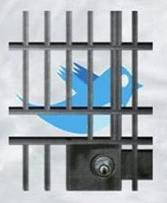 It's possible that lawsuits have been filed and haven't percolated through the system yet, but from the perspective of someone who keeps loose tabs on lawsuits in the social media space, we've seen very few lawsuits involving activity on Twitter, and even fewer that were uniquely caused by activity on Twitter.
Twitter is nothing more than another mode of communication. In the same way that blog posts and email (and other modes of communication) have spawned lawsuits, Twitter has spawned a few. The three that come to mind are: (1) the lawsuit against Courtney Love brought by her ex-designer; (2) the lawsuit filed against the ex-tenant who complained about her apartment being moldy; and (3) the dispute between AFP and the Haitian photographer where AFP allegedly took images from a twitpic account and broadly disseminated them thinking they obtained a license. Twitter has also spawned a few criminal prosecutions: (1) the guy in New York who tweeted the locations of the police who were engaging in crowd control; and (2) the guy who tweeted a bomb joke while at the airport. (I don't recall exactly, but I think incidents of Twitter hacking have resulted in a prosecution or two, and I wouldn't be surprised to see criminal prosecutions arising from phishing or other similar activity engaged in through Twitter.) Twitter activity has been cited by plaintiffs in a few brand-related lawsuits, but usually as part of a longer list of other actions taken by the defendant (e.g., defendant used my trademark on Facebook, on the internet, and on Twitter). [Tony La Russa's ill-fated lawsuit against Twitter is one exception. This lawsuit centered around a fake Twitter account.]
We'll have to wait and see, but my instinct is that there haven't been, and nor will there be, a flurry of lawsuits "caused by activity on Twitter." I think this is partially a function of the fact that it's tough to premise liability on links, and this leaves just 140 characters. As far as claims based on the text of tweets themselves, unless you are really consciously engaging in injurious activity, I would think it would be tough to get into trouble. On the civil side, I can think of a few bases of liability based on Twitter activity, and even these feel like a stretch when you look at a person's typical Twitter stream: (1) defamation; (2) brand-related injuries; (3) disclosure of confidential information (this is an off-the-cuff and obviously incomplete list).
At this point at least, civil liability caused by activity on Twitter has been far eclipsed by brand fallout from Twitter activity. So why is there an impression out there of widespread liability from Twitter use? I think it's a combination of lawyers and the media being overly excited about Twitter and bringing an inordinate amount of attention to anything involving Twitter (I'm probably part of the guilty crowd here). A run of the mill defamation lawsuit filed against Courtney Love would (much to Ms. Love's chagrin) likely receive minimal attention (except maybe in the gossip and entertainment industry publications). But because the lawsuit against Ms. Love involved Twitter, it received extensive coverage.
So, to answer LBW's question, of "what damages, crimes, and injuries" has Twitter led to? In my estimation, not much. As far as "Twitter law," which is mentioned in LBW's post, I'll leave that one to the experts . . . I'm most definitely not one!
As legal professionals embraced Twitter, we wondered how this would change the legal landscape. We wondered if it would turn the legal world upside down (soon we'll be effecting service of process through Twitter!). Given the premise of Twitter - to disclose bits of personal information, often driven by impulse - you would think we would have seen a host of "Twitter lawsuits" by now? No such luck.
It's possible that lawsuits have been filed and haven't percolated through the system yet, but from the perspective of someone who keeps loose tabs on lawsuits in the social media space, we've seen very few lawsuits involving activity on Twitter, and even fewer that were uniquely caused by activity on Twitter. Twitter is nothing more than another mode of communication. In the same way that blog posts and email (and other modes of communication) have spawned lawsuits, Twitter has spawned a few. The three that come to mind are: (1) the lawsuit against Courtney Love brought by her ex-designer; (2) the lawsuit filed against the ex-tenant who complained about her apartment being moldy; and (3) the dispute between AFP and the Haitian photographer where AFP allegedly took images from a twitpic account and broadly disseminated them thinking they obtained a license. Twitter has also spawned a few criminal prosecutions: (1) the guy in New York who tweeted the locations of the police who were engaging in crowd control; and (2) the guy who tweeted a bomb joke while at the airport. (I don't recall exactly, but I think incidents of Twitter hacking have resulted in a prosecution or two, and I wouldn't be surprised to see criminal prosecutions arising from phishing or other similar activity engaged in through Twitter.) Twitter activity has been cited by plaintiffs in a few brand-related lawsuits, but usually as part of a longer list of other actions taken by the defendant (e.g., defendant used my trademark on Facebook, on the internet, and on Twitter). [Tony La Russa's ill-fated lawsuit against Twitter is one exception. This lawsuit centered around a fake Twitter account.]
We'll have to wait and see, but my instinct is that there haven't been, and nor will there be, a flurry of lawsuits "caused by activity on Twitter." I think this is partially a function of the fact that it's tough to premise liability on links, and this leaves just 140 characters. As far as claims based on the text of tweets themselves, unless you are really consciously engaging in injurious activity, I would think it would be tough to get into trouble. On the civil side, I can think of a few bases of liability based on Twitter activity, and even these feel like a stretch when you look at a person's typical Twitter stream: (1) defamation; (2) brand-related injuries; (3) disclosure of confidential information (this is an off-the-cuff and obviously incomplete list).
At this point at least, civil liability caused by activity on Twitter has been far eclipsed by brand fallout from Twitter activity. So why is there an impression out there of widespread liability from Twitter use? I think it's a combination of lawyers and the media being overly excited about Twitter and bringing an inordinate amount of attention to anything involving Twitter (I'm probably part of the guilty crowd here). A run of the mill defamation lawsuit filed against Courtney Love would (much to Ms. Love's chagrin) likely receive minimal attention (except maybe in the gossip and entertainment industry publications). But because the lawsuit against Ms. Love involved Twitter, it received extensive coverage.
So, to answer LBW's question, of "what damages, crimes, and injuries" has Twitter led to? In my estimation, not much. As far as "Twitter law," which is mentioned in LBW's post, I'll leave that one to the experts . . . I'm most definitely not one!



Comments