Intercepting Text Messages
The story about the Wal-Mart employee intercepting the text messages of reporters is winding its way through the US Attorney's Office in the Western District of Arkansas. That office is investigating whether the employee broke any laws (probable answer: yes, see Electronic Communications Privacy Act, the McDermott matter, but there are many statutory nuances so it's tough to say for sure from this perspective).
On the practical side, The Red Tape Chronicles checks out how easy it is to actually come up with (or purchase) something that can intercept text messages. Its report is decidedly mixed:
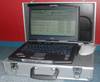
Home Land brags on its site -- CellularIntercept.com -- about the powers of the "G-Com 2066," saying it will "capture SMS (short message service) data. It is a passive system -- no signal is transmitted from the system and the cell phone network receives no electromagnetic interference." The site says that all devices sold there are "restricted and reserved for authorized agents of Government."That last comment about only "specialized hackers" and "government spooks" being able to intercept text messages is notable. As far as I know, the Wal-Mart employee does not really fit into either category. Or does he?The G-Com 2066 comes in its own silver suitcase. Image: Global-Security-Solutions.com
Global Security Solutions offers a similar product called the "GSS ProA - GSM Interceptor." It costs close to $1 million, says owner John Demeter. He said the U.S. Defense Department is among the company's clients.
But Joe Farren, a spokesman for mobile phone industry group CTIA, rejected the idea that amateurs with inexpensive equipment could intercept text messages, saying that would be limited to the realm of highly specialized hackers and government spooks.
But he also stated that a determined hacker who wanted to grab all the text messages floating around in a certain area wouldn't have to spend that kind of coin to do so. A teenager could build a radio kit to do it from parts purchased at an electronics store, he said.
"There are many different ways to do it," he said. "Whatever is in the air can be intercepted and listened to."
Former White House cybersecurity adviser Howard Schmidt echoed Demeter's claim. He was even more specific, saying a few parts purchased for about $100 at a local Radio Shack would do the trick. In fact, he said, he helped build such a kit as part of a security assessment for a company only a few years ago.
"Text messages are transmitting over radio frequencies ... unencrypted. You can intercept them and pull the pieces back together," Schmidt said. "There are schematics all over to do this."
I guess at some point people will ask the obvious question of "what Wal-Mart knew and when did they know it".



Comments